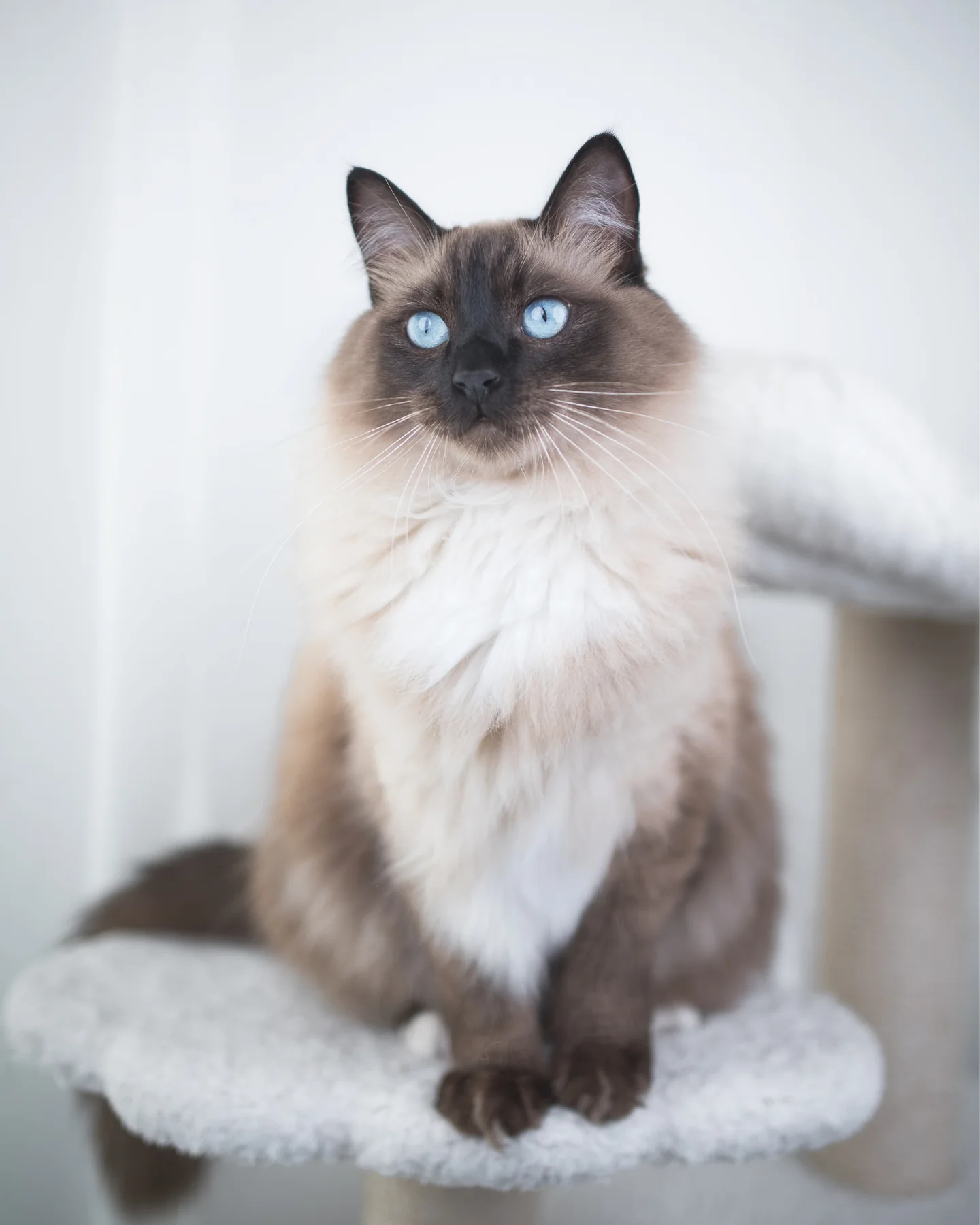
Seal
Deep, warm brown points with strong contrast against the lighter body.
Ragdoll Color & Pattern Guide
What makes a Ragdoll “blue bicolor” instead of “seal mitted”? The easiest way to understand Ragdoll names is to separate color from pattern. Color tells you the shade of the points. Pattern tells you how that color and white are arranged.
Start Here
Seal, blue, chocolate, lilac, red/flame, cream and other recognized colors describe the shade of the darker points.
Colorpoint, mitted and bicolor describe how the point color and white are distributed across the cat.
A blue bicolor is therefore a blue-colored Ragdoll with a bicolor pattern. A seal mitted is seal-colored with the mitted pattern. Add lynx, and the colored areas also show tabby-like striping.
Ragdoll Colors
Photos can shift with lighting, age, and camera processing, so use visual examples as a guide rather than a genetic identification tool.
Deep, warm brown points with strong contrast against the lighter body.
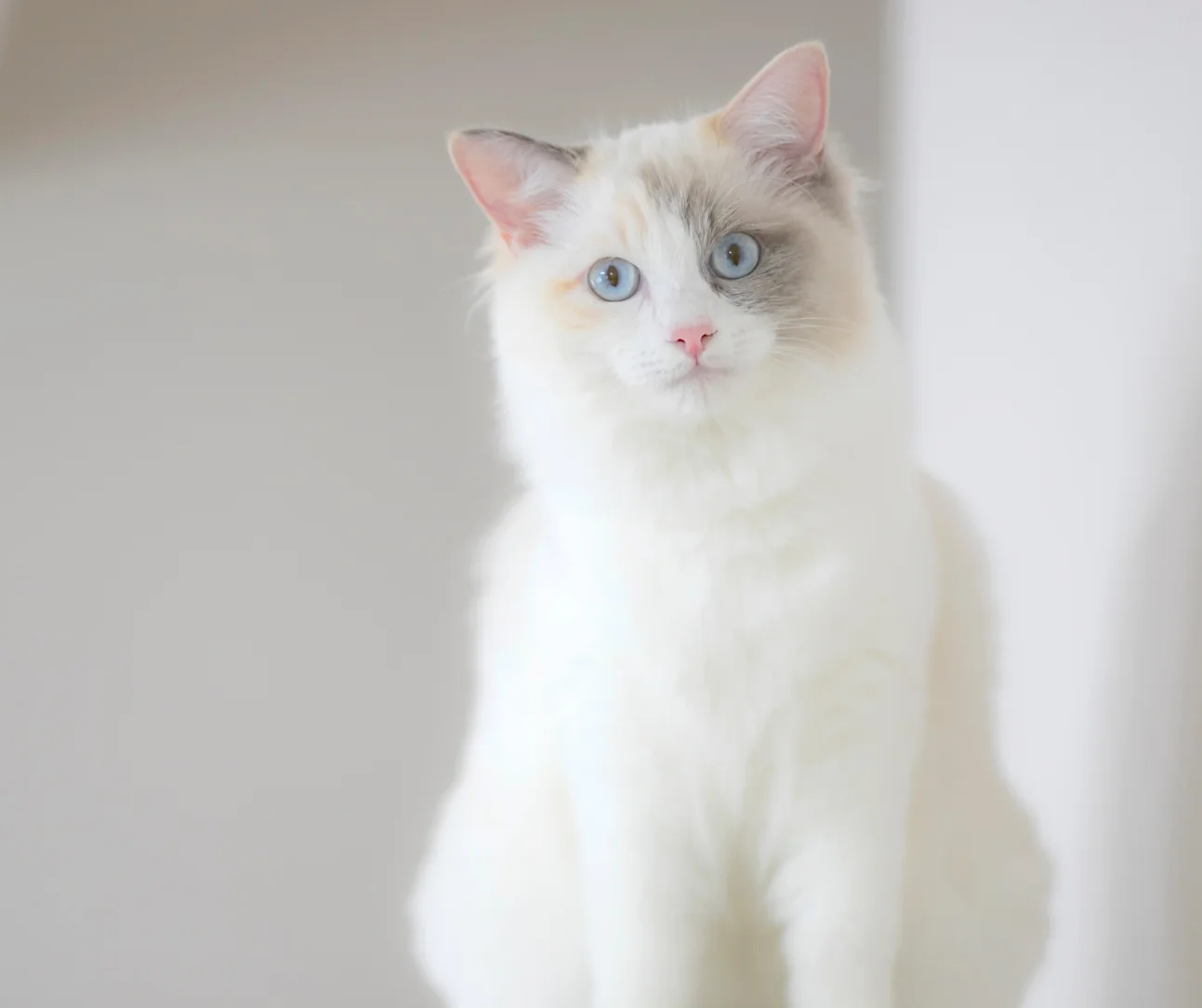
A cool, soft gray rather than literal blue. Blue is the dilute version of seal.
Lighter and warmer brown than seal, often compared with milk chocolate.
Very pale and cool with a subtle pinkish cast. Young lilacs can be difficult to distinguish in photos.
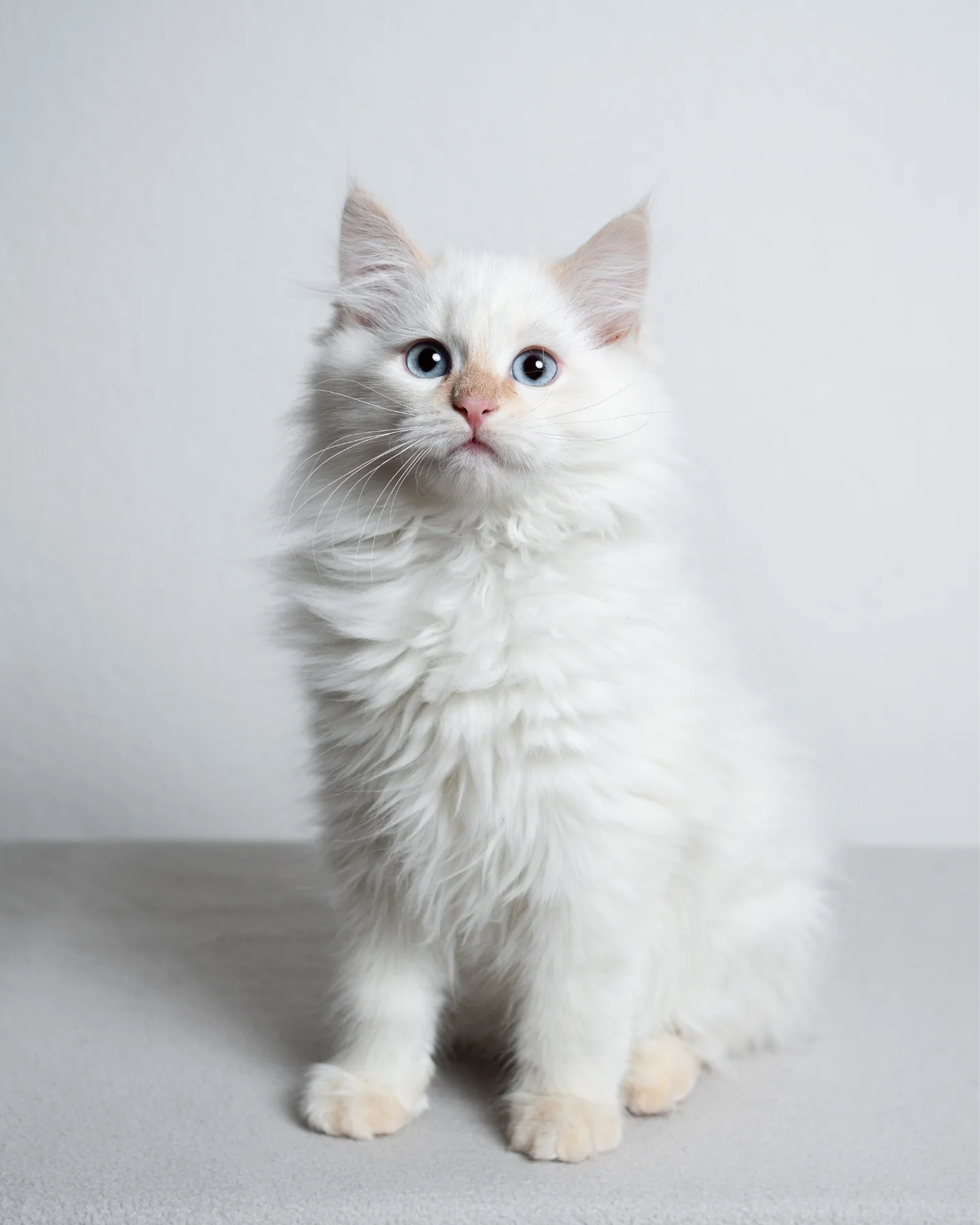
Warm apricot, orange, or reddish points. “Flame point” is the common owner term for red point.
The dilute version of red, with much softer buff or creamy point color.
Breed registries do not use completely identical color terminology. The familiar core colors include seal, blue, chocolate, lilac, red and cream.
Ragdoll Patterns
Color appears on the face, ears, legs, paws, and tail while the body stays lighter. There is no white spotting.
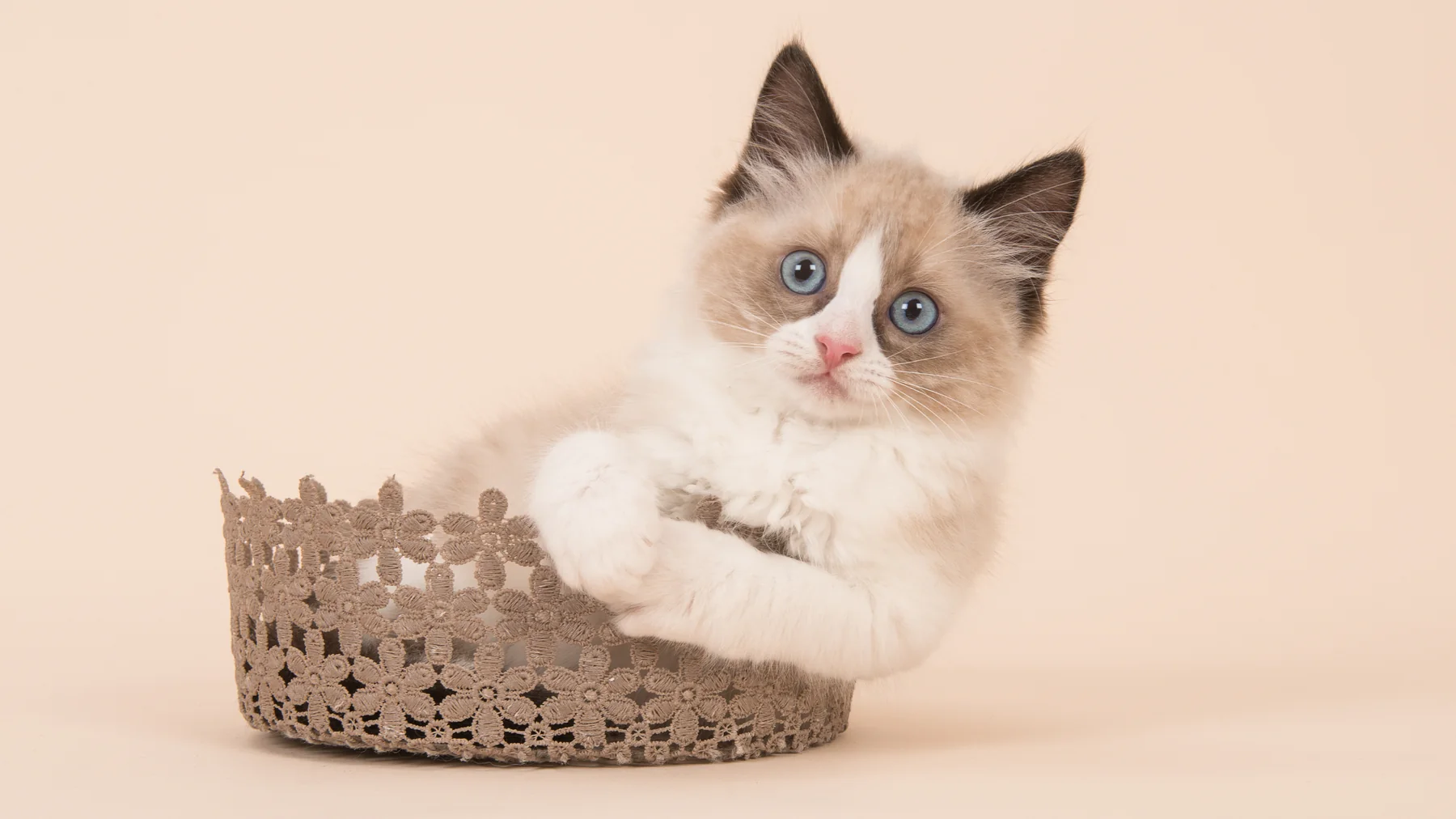
Similar to colorpoint, but with white mittens on the front paws, white boots behind, a white chin, and white along the belly.
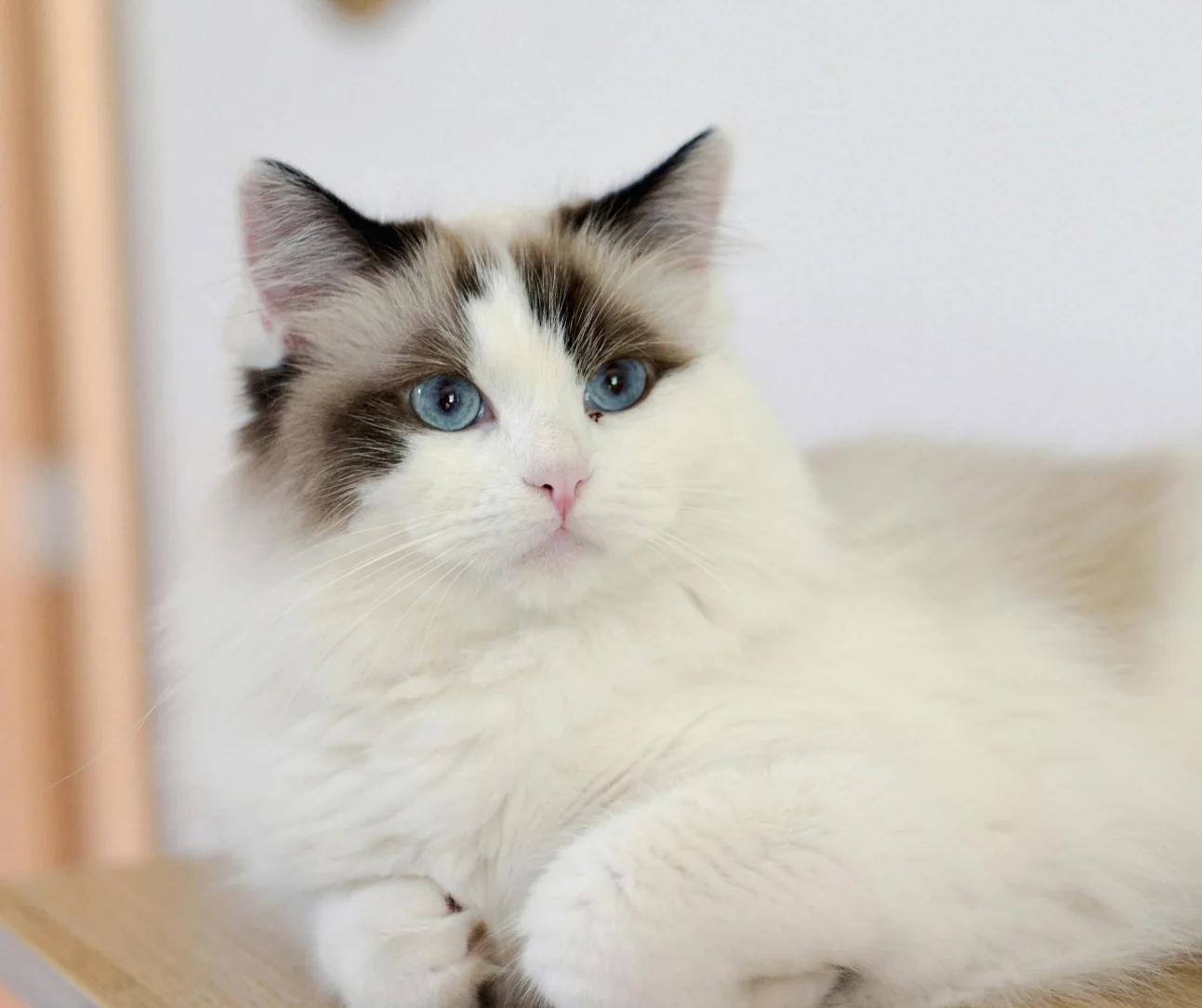
More white overall. The easiest feature to recognize is usually the upside-down white V on the face, with a white chest, belly, and legs.
Two Ragdolls can share the same pattern but have different colors. A blue bicolor and seal bicolor may have similar white placement, while their point color looks cool gray versus warm brown.
Markings & Variations
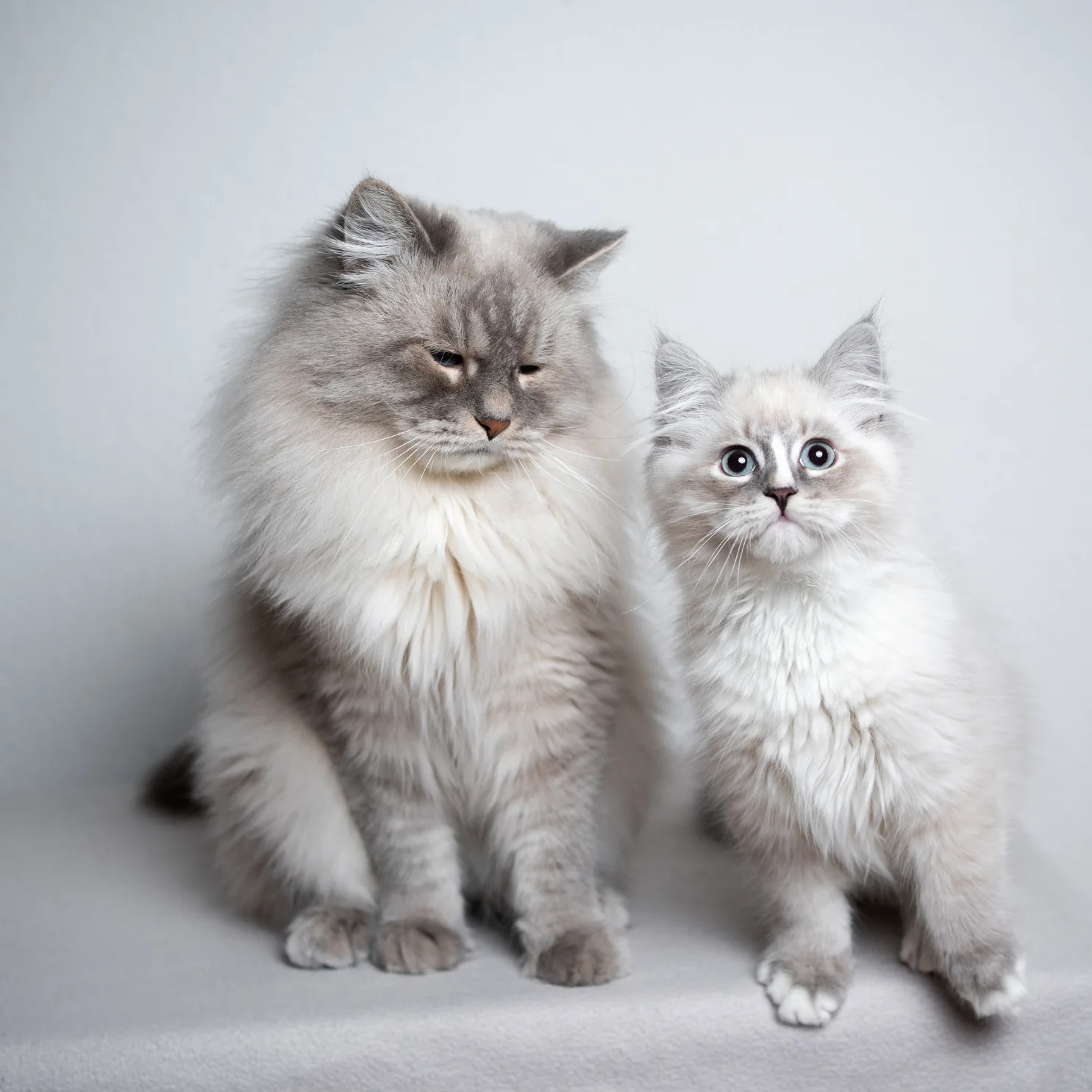
Lynx describes tabby-like striping within the colored areas. It is often easiest to notice around the forehead, eyes, cheeks, legs, and tail.
That is why a cat can be described as a blue lynx bicolor: blue is the color, bicolor is the pattern, and lynx describes the striping within the colored areas.
The pair pictured here shows the facial striping that makes lynx markings easier to recognize visually.
Growing Up
Ragdoll kittens are born almost completely white or very pale. Their pointed coloring develops after birth because the gene responsible for the classic pointed pattern is temperature-sensitive. Pigment develops more strongly on cooler areas such as the ears, face, legs, paws, and tail.
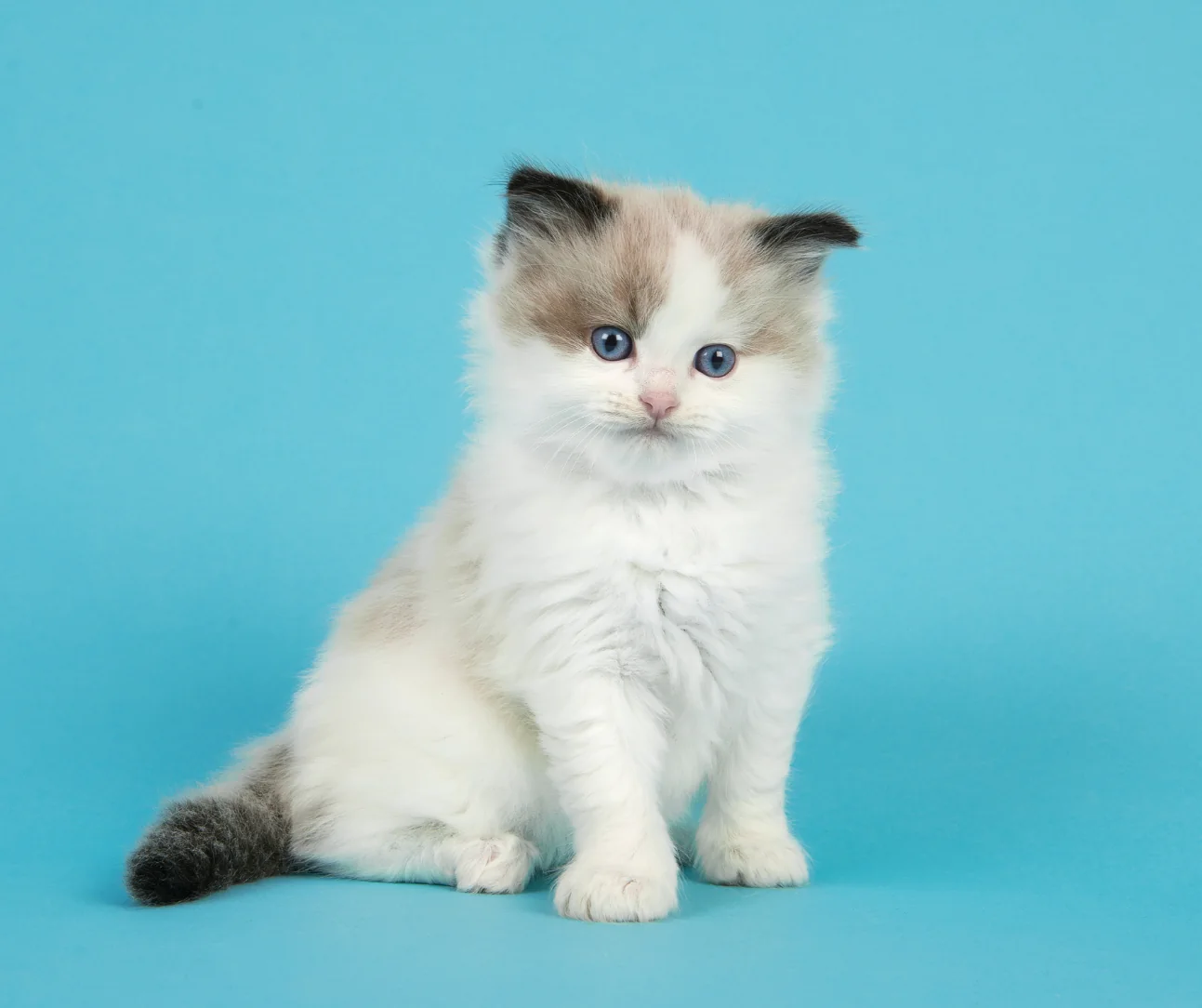
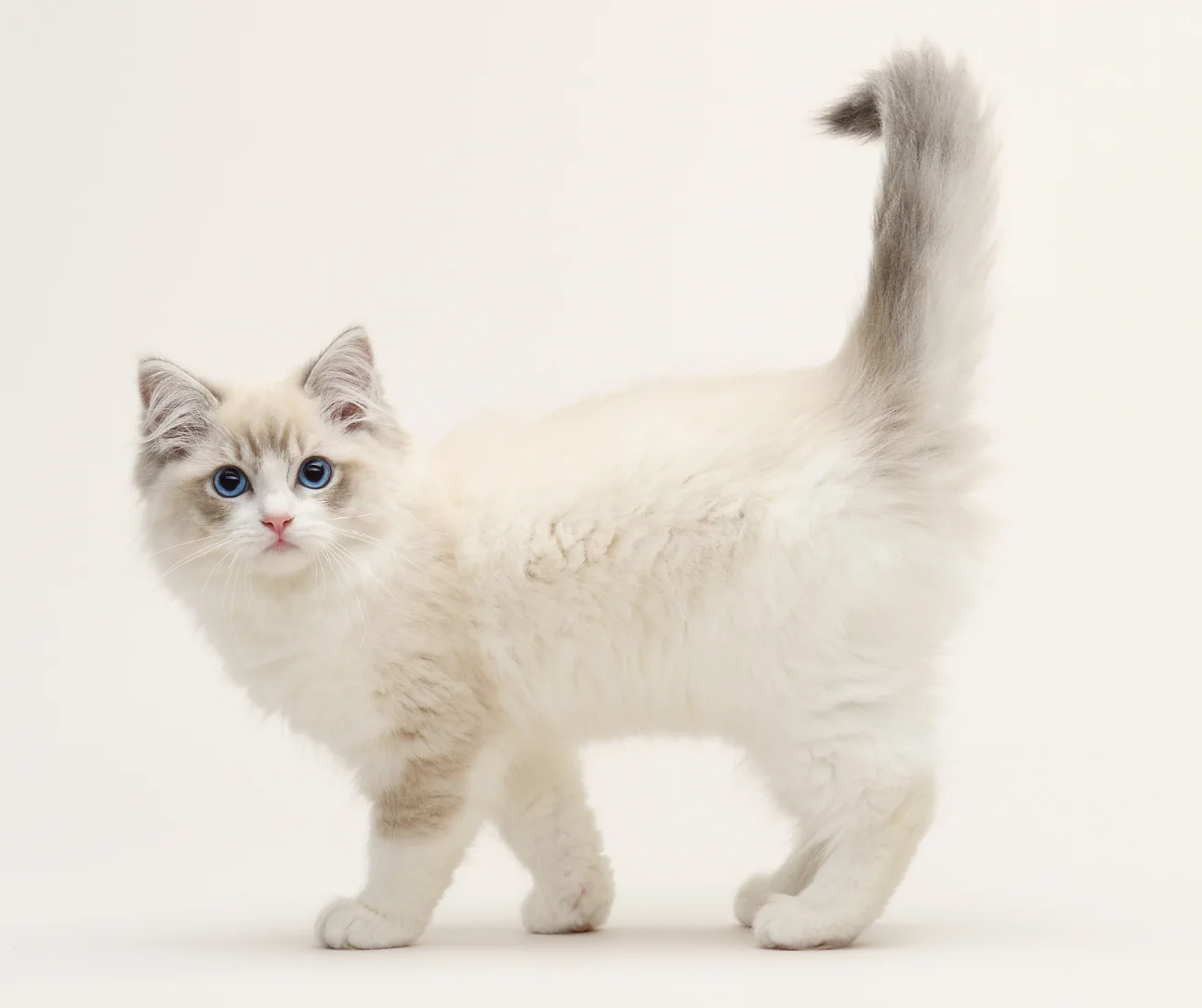
Yes. Point color generally deepens and becomes more defined as a Ragdoll matures, and the body can develop additional shading too. That is why identifying a very young kitten from a single photo can be tricky.
Quick Identification Guide
Warm dark brown suggests seal. Cool gray suggests blue. Warmer orange/apricot suggests red or flame.
No white spotting points toward colorpoint. White mittens suggest mitted. A prominent inverted white V suggests bicolor.
Tabby-like lines within the colored areas indicate lynx markings.
Example: cool gray points + an inverted white V + facial striping = a description such as blue lynx bicolor.
At Gulf Coast Ragdolls
Our current and past litters may include blue bicolor and flame point Ragdolls, among other appearances. Availability changes by litter, so the best place to see the kittens currently looking for homes is our Available Kittens page.
If you are choosing between two looks, our Blue Bicolor vs. Flame Point guide compares two of the appearances families ask us about most often.
View available kittens
Find Your Ragdoll
See current litters, photos, reservation status, and go-home timing.